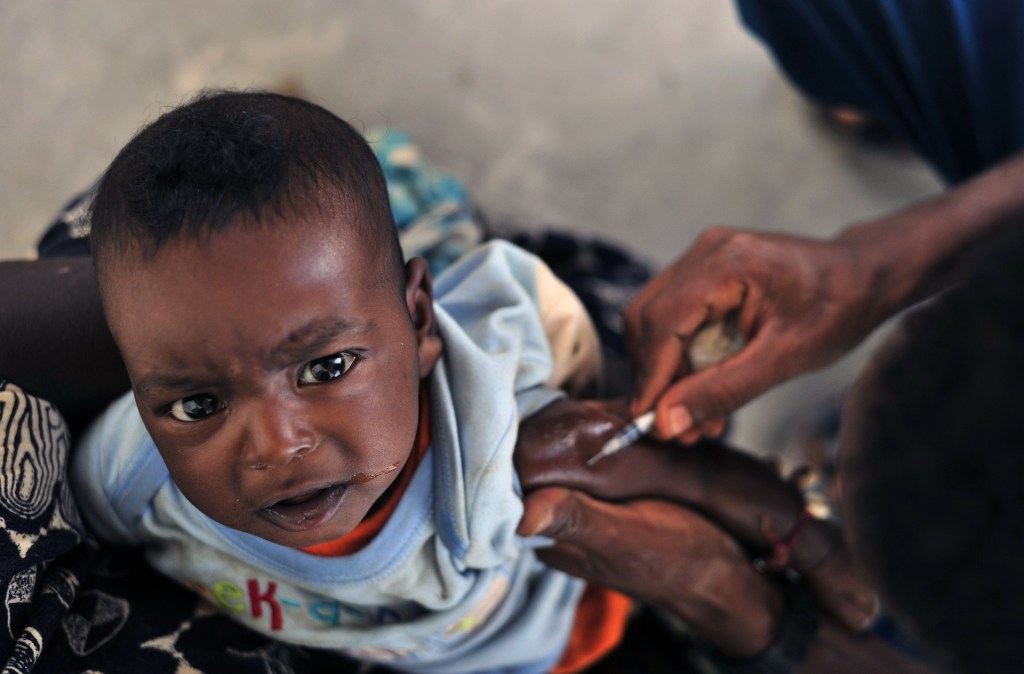
On October 6, 2021, centuries after Malaria continued to ravage Africa, The WHO recommended widespread malaria vaccine among children in sub-Saharan Africa and other regions with what they are calling a “moderate to high malaria transmission”.
As much as this is truly a historic moment for people in sub-Saharan Africa and a breakthrough for science, I think it surfaces the inequity glaringly in Healthcare.
More than 260,000 African children under the age of five are among the about one million that die every year as a result of Malaria. The COVID-19 death toll pales compared to Malaria, yet multiple vaccines were given conditional approvals in record time. One must wonder why the malaria vaccine has taken so long to see the light of day.
The CDC’s mission to combat malaria started on July 1, 1946, Seventy-five years ago! They focused on controlling and eliminating malaria in the United States. That mission was successful; they reduced the transmission of malaria significantly, and by 1951, Malaria was considered eliminated in the United States. The big question in my mind is why hasn’t that secret sauce been able to scale successfully in sub-Saharan Africa?. They then shifted their focus to prevention, surveillance and providing technical support domestically and internationally and that continues to be their focus to date.
In 2006, the WHO developed a global strategy to accelerate malaria vaccine development, with the interim goal of licensing a first-generation vaccine with protective efficacy of more than 50% against severe disease and death by 2015 and licensing vaccines targeting P. falciparum and P. vivax by 2030. We now have the WHO recommendation, but many questions abound.
What does this mean for actual rollout? Pharmaceutical giant GSK has committed to rolling out 15 million doses of the vaccines a year at “manufacturing” cost plus 5% but “no price specified.” It is left to countries and donors to come up with funding for these vaccines. If the vaccines are as cost-effective as they have promised, why is there secrecy around the pricing? They know the manufacturing cost and can compute the additional 5%. How are the countries going to pay for it? And what does that mean for the vaccine recipients? Many of whom cannot afford to pay any out of pocket for the vaccine.
what about the cost of education and awareness campaigns in the rural areas that require the vaccine the most? What infrastructure is needed to administer the vaccine, and how does that factor into the total cost of administration?
As an African, who has lived through several bouts of Malaria, one the one hand, I know first-hand the potential this vaccine has; On the other, I also know that in sub-Saharan Africa, healthcare is for the very wealthy. A lot more work still needs to be done to ensure that the children who truly need this vaccine can get it.
 Musings of a Health Equity Advocate